We’ve posted before about vertical burial — that is, placing corpses in upright containers for burial in the ground standing up. The proposed Moksha Tower in Mumbai takes this concept to a whole new level by providing burial space in a skyscraper, giving “burial” and memorial options in a physical space while conserving precious horizontal green space that might otherwise be used for parks — or housing for the living.
While this design is clearly not in any spiritual tradition, the Moksha Tower attempts to appeal to the four major religious groups in Mumbai. According to an article from the Council on Tall Buildings and Urban Habitat, the tower “acts as a symbolic link between heaven and earth”:
For Muslims, it provides areas for funerals and space for garden burial; for Christians, areas for funerals and burial; for Hindus, facilities for cremation and a river to deposit a portion; for Parsis, a tower of silence is located on the roof of the tower.
2 Bodies Found in Wrong Plots at Arlington Cemetery
Christian Davenport, Washington Post (September 15, 2010)
Arlington National Cemetery officials discovered that two people were buried in the wrong plots after exhuming their remains last month, an Army official confirmed Tuesday.
Two more articles on the problems at Arlington National Cemetery recently ran in the Washington Post and the situation is going from bad to worse. Way worse.
These are two interrelated articles, separated by about a week and represent a huge problem for cemetery authorities: bodies in the wrong plots, plots marked with headstones that lack bodies, and multiple sets of remains in single plots.
Early on, when the problems at Arlington Cemetery first emerged, I suggested that mass disinterments might be required. This was partially in jest but I am beginning to think that it could happen. These are Code Red, worst case scenarios for ANY cemetery, let alone Arlington National Cemetery which handles military funerals.
At this point, it is hard to know what Arlington officials can do other than check every single grave. That is a total of 300,000 graves (give or take), with approximately 6,900 new funerals every year. Even if officials cut the total number in half, it’s still 150,000 graves that need checking and that would be a Herculean task.
You can read all of Death Ref’s Arlington Cemetery reports here.
Digital Death Day London
Saturday, October 9th 9am-5pm
Centre for Creative Collaboration
University of London
16 Acton Street
(King’s Cross Station)
WC1X 9NG London
Last May, Meg wrote up a really interesting piece on a Digital Death Day un-conference in California. That post, Digital Death Day is Every Day, is part of Death Ref’s ongoing coverage of all things postmortem and online. See, for example, the Death + the Web section of the website.
Meg, Kim, and I were all disappointed that we missed the Digital Death Day since the organizers outlined a number of topics that the three of us follow:
Death is a part of life and life has (to an extent) become digital.
This un-conference will be primarily concerned with provoking discourse around the social, cultural and practical implications of Death in the Digital World. Thus stimulating a reconsideration of how death, mourning, memories and history are currently being augmented in our technologically mediated society.
The archiving, networking and post mortem engagement of ‘digital remains’ leads us to consider what place digital information has in our lives legally, sentimentally and historically.
But then something oh-so-exciting happened: a second Digital Death Day event was announced and this one will be in London.
Meg, Kim, and I want a strong showing from our UK Death Reference Desk readers. Indeed, I’ll be able to attend this next Digital Death Day since Bath (where I live) is just a hop, skip, and a jump for old smokey.
The trick with all these ongoing discussions about how death has changed due to digital technologies is that we Homo sapiens are still in the middle of the forest on this one.
As Meg once succinctly put it: How long is forever on the internet?
So there you have it.
I look forward to engaging in all these postmortem discussion topics on October 9 and please, please come up and say hello.
There is an appointed time for everything. And there is a time for every event under heaven.
A time to give birth, and a time to die; A time to plant, and a time to uproot what is planted.
A time to kill, and a time to heal; A time to tear down, and a time to build up.
A time to weep, and a time to laugh; A time to mourn, and a time to dance.
A time to throw stones, and a time to gather stones; A time to embrace, and a time to shun embracing.
A time to search, and a time to give up as lost; A time to keep, and a time to throw away.
A time to tear apart, and a time to sew together; A time to be silent, and a time to speak.
A time to love, and a time to hate; A time for war, and a time for peace.
(Ecclesiastes 3:1, partial)
Apparently too, there is a time to play pop songs and there is a time NOT to play pop songs.
This past week the Catholic church in Australia sent down an edict banning all pop and rock music and football club songs from funerals performed in their churches. The guidelines, handed down by Archbishop of Melbourne, Denis Hart, were distributed this week to priests and funeral directors. Funerals are to be “sacred farewells”; “life celebrations” should be done before or after the formal service. According to the article:
“The wishes of the deceased, family and friends should be taken into account … but in planning the liturgy, the celebrant should moderate any tendency to turn the funeral into a secular celebration of the life of the deceased,” the guidelines state.
Shheeeeesh!
The article goes on to list the top 10 most popular songs played or sung at Australian funerals. I love that “Ding Dong the Witch is Dead” from the Wizard of Oz made the cut (although is was categorized as a “popular unusual” song).
Death In Space
Mary Roach, Boing Boing (September 02, 2010)
Wherever living humans go, the possibility of dead human bodies follows. It is the fullest expression of mortality’s inherent fragility.
So, when humans finally travel into space for extended periods of time without the luxury of a quickish return to Earth, dead body contingencies need to be thought through.This is especially true for any eventual trips to Mars, which may or may not involve establishing colonies.
Here’s the rub: NASA does not appear to have plans on what to do if an astronaut dies during a mission. Or the plans, if they exist, are not available to the public. I came across some news articles on this apparent planning gap, and it appears that NASA planners haven’t really taken seriously the possibility of an astronaut’s death during an extended voyage or what to do with a dead body during a mission.
This is not a minor point. Returning the dead body and its remnants to next of kin is standard procedure for US governmental operations; NASA space missions are no different. Yet during long or arduous expeditions dead bodies are often left behind, if for any reason, bringing the corpse back is too difficult and/or actually endangers fellow team members. Climbers who die on Mt. Everest are routinely left behind where they fall, not out of malice but out of necessity.
Enter into all of this, then, Mary Roach. Many of you will know Roach from her books Stiff, Spook, and Boink. She has also just written a new book entitled Packing for Mars, on exploring the red planet. Earlier this month, she wrote a short piece for Boing Boing about death in space and what might be done with a dead body. Oddly, Mary Roach’s work has popped up in a few different places the last few weeks.
Here is the lead from Mary Roach’s essay for Boing Boing:
The U.S. has plans for a manned visit to Mars by the mid-2030s. The ESA and Russia have sketched out a similar joint mission, and it is claimed that China’s space program has the same objective. Apart from their destination, all these plans share something in common: extraordinary danger for the explorers. What happens if someone dies out there, months away from Earth?
Roach discusses a plan developed by the Swedish environmentalist/burial innovator Susanne Wiigh-Mäsak and collaborator Peter Mäsak. Many readers of Stiff will remember Susanne Wiigh-Mäsak and her innovation called Promession. In a nutshell, the proposed system would reduce the dead body’s size and volume, thereby making it simpler to transport back to Earth. The full proposal (which is being developed with NASA) should be read to fully glean how this system would work.
What Wiigh-Mäsak and NASA are proposing is fine…but leaving the body in space would still be simpler. Indeed, the main reason to keep a body on hand after death would be for a postmortem examination to determine the Cause of Death and to see if the other astronauts were at risk for some previously unknown pathogen. That said, if an autopsy is not possible because of weaker gravitational pull and/or after a successful postmortem exam takes place, then the body is best given a respectful burial in space. I would rather see NASA develop plans for final disposition in space than a spaceship’s crew trying to make room for a dead colleague.
Besides, I have a hunch that any person who dies in space will probably want to stay in the ether.
Per usual, science fiction has already offered up one example of what a proper burial in outer space could resemble (see the vid at top).
The Santa Fe New Mexican published a feature story last week about the often difficult and uneasy situations created when gays and lesbians are faced with the death of their partner. In so many cases, the surviving partner is not considered part of the family and is intentionally or unintentionally branded with outsider status. He or she is left out of decision-making and grieving rituals before, during and after the death of a life partner. Grief over the loss of a loved one is often compounded by a lack of understanding and/or compassion on the part of the partner’s family, which then may extend to an oblivious or even hostile larger community.
John wrote this past May about the extra end-of-life legal hoops for same-sex partners in Minnesota. Governor Tim Pawlenty vetoed a bill that would have given same-sex partners in long term relationships the legal right to the other partner’s dead body for funeral arrangements and final disposition of the remains.
Several couples are profiled in the New Mexican article. Take the instance of Tom Rotella’s partner:
When Tom Rotella’s partner died in California in 1998, his family recognized Rotella as the decision-maker. But after Rotella’s employer, the Los Angeles Public Library, announced the death in a newsletter, someone started subscribing to pornographic magazines in Rotella’s name, and there was a “mass exodus” of friends, Rotella said. “I was alone.” A contingent of colleagues did come to the funeral to support Rotella, he said, but his own parents declined, ostensibly to spare his father from learning that his son was gay. “That killed me,” he said.
Or take the case of Lynne Roberts:
Lynne Roberts’ partner fell seriously ill in 1988 after they had been together about eight years in New York City. The hospital waited for the woman’s ex-husband to sign papers allowing treatment, although Roberts was the one who brought her partner to the emergency room. While Roberts had been invited to all the family gatherings, “I was put on the periphery,” Roberts said. The family never called her with reports on her partner’s condition, and when the woman eventually died (the two were separated at the time) the family didn’t call Roberts or invite her to the cremation or burial.
These cases are disturbing and unfortunate. Of course, it’s not like this for every gay or lesbian couple dealing with the death of their partner. There are many compassionate and understanding family members, hospitals and funeral homes out there that do not discriminate or create difficult situations for same-sex partners. However, there is still a long way to go—legal and cultural—in allowing all those in the LGBT community the same rights and dignity as heterosexuals when it comes to issues of human compassion in the face of death, dying, grief and mourning. Last year’s Academy Award winning movie, A Single Man, based on the novel of same name by Chris Isherwood, dealt with one man’s grief after losing his partner in a car accident. The film is set in the early 1960s, a time when being closeted was much more a fact of life for so may gay men and women, especially since the 1969 Stonewall riots had not even yet occurred. And while much progress has been made in the intervening years, there is still a long way to go.
There are books that deal specifically with the legal, familial and cultural hurdles of same-sex partners dealing with the loss of a loved one. I’ve listed a few here.
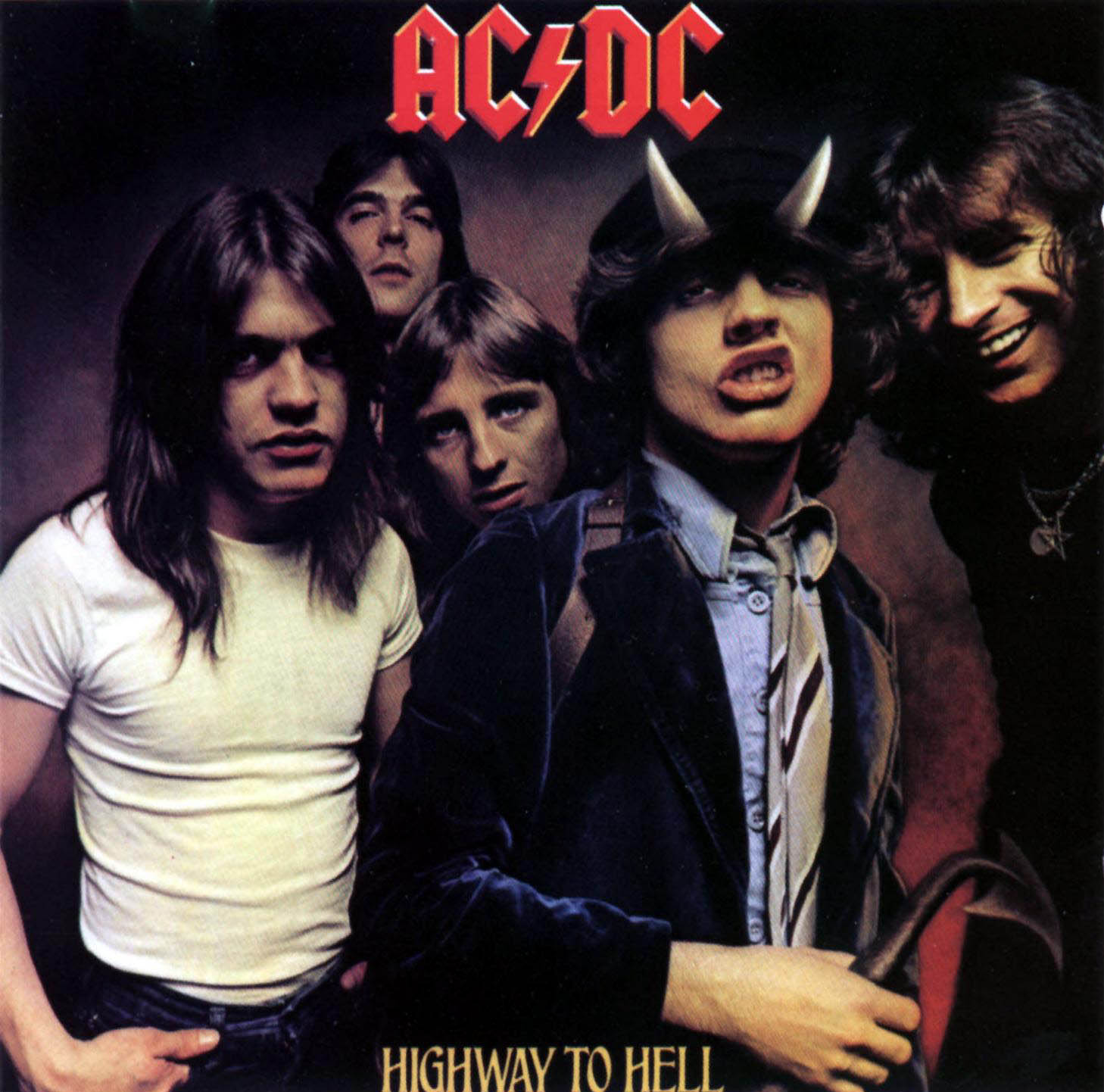
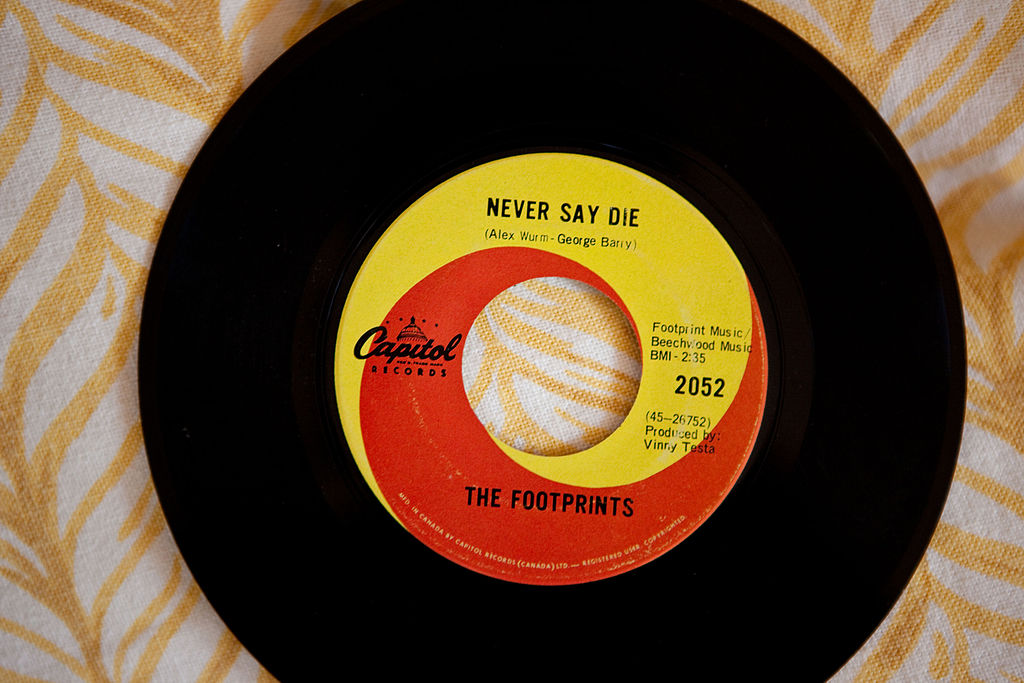
Many many people saw this Wired article on human cremains being mixed into vinyl records when it first popped up two weeks ago. I know that many people saw this article because everyone kept sending it to me and/or asking me about it. Then a Death Reference Desk Facebook “liker” put it on the Wall of Death, which meant that I had to do something other than just report this story. Our readers keep us on our toes.
After mulling over various story angles I realized that the most interesting thing to point out was this: Mixing cremated human remains into ANYTHING to produce an object of some kind which is then kept as a memorial isn’t new. In fact, Meg, Kim and I have been discussing the myriad ways human cremains get used since day one of Death Ref. You can read those posts here.
I was even in New York this summer giving a lecture on people who have cremated remains put into their Memorial Tattoos. The Comments Section for one of our Memorial Tattoo postings has morphed into a Q and A area for people who want to use created remains in a tattoo. I’m mentioning the tattoos and cremated remains because I know that people are fascinated by the concept.
So what And Vinyl is offering to do with cremated remains isn’t all that new but it is cool. The only problem that I have with the concept is this: I have no idea what record album I would choose and/or combination of songs. I’ve been thinking and thinking but I can’t come up with the perfect mix.
Anyway, the human-ash-pressed-into-vinyl story got me thinking about some of the other ways cremated remains are used to produce objects. These are just the ones I know about and could find. I even looked for companies putting cremated remains into glass bongs but I couldn’t find any. That said, I bet the entire cost of a Life Gem (please see below) that someone, somewhere is turning grandma’s ashes into a sweeeeeeeet smoker.
And remember: Most of these options also work for Pets. So that means you can have your pets’ created remains turned into a semi-precious stone, a memorial reef, and blasted into space.